Rhinoplasty Before and After
Real results from a consultant ENT and facial plastic surgeon
Every nose is different. These cases show the range of what can be achieved — from subtle refinement to structural reconstruction — by Mr David Whitehead at NOSE London.
Understanding Before and After Photos
Before and after photographs are one of the most important tools for understanding what rhinoplasty can achieve. Research by Givens and Perkins (2021) found that 70% of patients used online before and after galleries as part of their decision to proceed with surgery — making this page one of the most important on any rhinoplasty practice's website.
However, not all before and after photos are created equal. A systematic review by Wolfe et al. (2020) found that only 28.6% of published surgical photographs adhered to the ASPS/PSF photography standards. Many showed only a single frontal view, with inconsistent lighting and angles. This makes standardised photography essential for fair comparison — and it is something I take seriously at NOSE London.
The AAO-HNS Clinical Practice Guideline (Ishii et al., 2017) recommends that outcomes should be documented at a minimum of 12 months after surgery, when the majority of healing is complete. All cases in this gallery meet that standard. I also use the Vectra H2 3D imaging system as part of my preoperative assessment, which allows patients to visualise potential changes before committing to surgery.
When reviewing any surgeon's before and after gallery — including mine — consider:
- Consistency of lighting and angles — standardised medical photography (front, profile, three-quarter, base view) allows fair comparison. Be cautious of photos taken in different lighting or with different focal lengths, which can distort the nose.
- Time since surgery — results at 3 months still show significant swelling, particularly at the tip. Final results are typically assessed at 12+ months. I label all photos with the time point.
- Skin type — thicker skin (common in certain ethnic backgrounds) shows refinement more gradually and may retain more tip fullness. This is not a failure of technique — it is normal anatomy.
- Functional improvement — photos show external change but cannot convey the breathing improvement. I use validated outcome measures (NOSE scale, SNOT-22) to document functional results alongside visual ones.
3D Imaging with Vectra H2
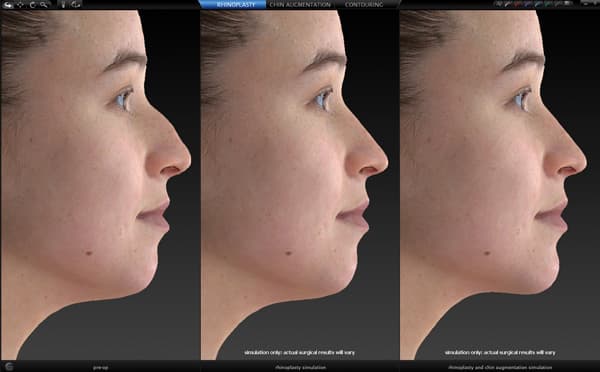
At NOSE London, I use the Vectra H2 3D imaging system as part of every rhinoplasty consultation. The system captures a detailed three-dimensional model of your nose using structured light photography, producing a digital replica that can be viewed and rotated from any angle.
Using this 3D model, I can simulate the planned surgical changes on screen during your consultation — adjusting the bridge height, tip projection, nostril width, and overall profile so you can see what the proposed result might look like before committing to surgery. This is one of the most effective ways to ensure we are both working towards the same goal.
The evidence supports this approach. A systematic review and meta-analysis of 12 studies (595 patients) found that 3D technology produced significantly higher surgeon satisfaction and greater precision compared to traditional 2D imaging (Werathammo et al., 2024). Patients reported better understanding of the procedure and greater involvement in surgical planning.
Importantly, a study using the same VECTRA system found that a blinded panel of physicians rated the actual surgical result as superior to the 3D simulation in 77.5% of cases (Persing et al., 2018). In other words, the simulation tends to under-promise rather than over-promise — which is exactly what you want from a planning tool.
A randomised controlled trial further confirmed that while 3D simulation did not change overall outcome satisfaction, it significantly increased satisfaction with doctor-patient communication (Li et al., 2021) — helping patients feel more informed and involved in the decision.
It is important to understand that the simulation is a communication tool, not a guarantee. Your actual result will depend on your skin thickness, cartilage strength, and healing biology. However, the evidence consistently shows that 3D imaging improves the conversation between surgeon and patient and helps set realistic expectations from the outset.
Results Gallery
Patient Reviews
Verified reviews from Doctify — an independent platform where only treated patients can leave feedback.
How to Use These Photos
These photos are shared with written patient consent. Every nose is unique, and results depend on your starting anatomy, skin thickness, healing biology, and the specific changes discussed at consultation.
Research by Citron and Townley (2023) followed 165 UK rhinoplasty patients using the FACE-Q outcome tool and found that while overall satisfaction improved significantly after surgery, the nasal tip had the lowest satisfaction of any subunit — with 19% of patients remaining dissatisfied. This underlines why tip work requires careful discussion and realistic goal-setting before surgery.
A separate study by Luong et al. (2024) of 380 patients found that older patients and those who had undergone prior nasal surgery reported lower satisfaction scores. If either applies to you, it does not mean surgery cannot help — but it does mean the consultation conversation is especially important.
Before and after photos should help you:
- Assess aesthetic style — do the results look natural and proportionate? Do they match what you want?
- See realistic outcomes — subtle refinement is often more appropriate than dramatic transformation
- Understand variation — compare cases with similar starting anatomy to yours
- Start a conversation — bring photos (mine or others') to your consultation to discuss what you do and don't like
I do not guarantee any specific result. Surgery is a collaboration between surgeon skill and individual biology.
How Results Are Photographed
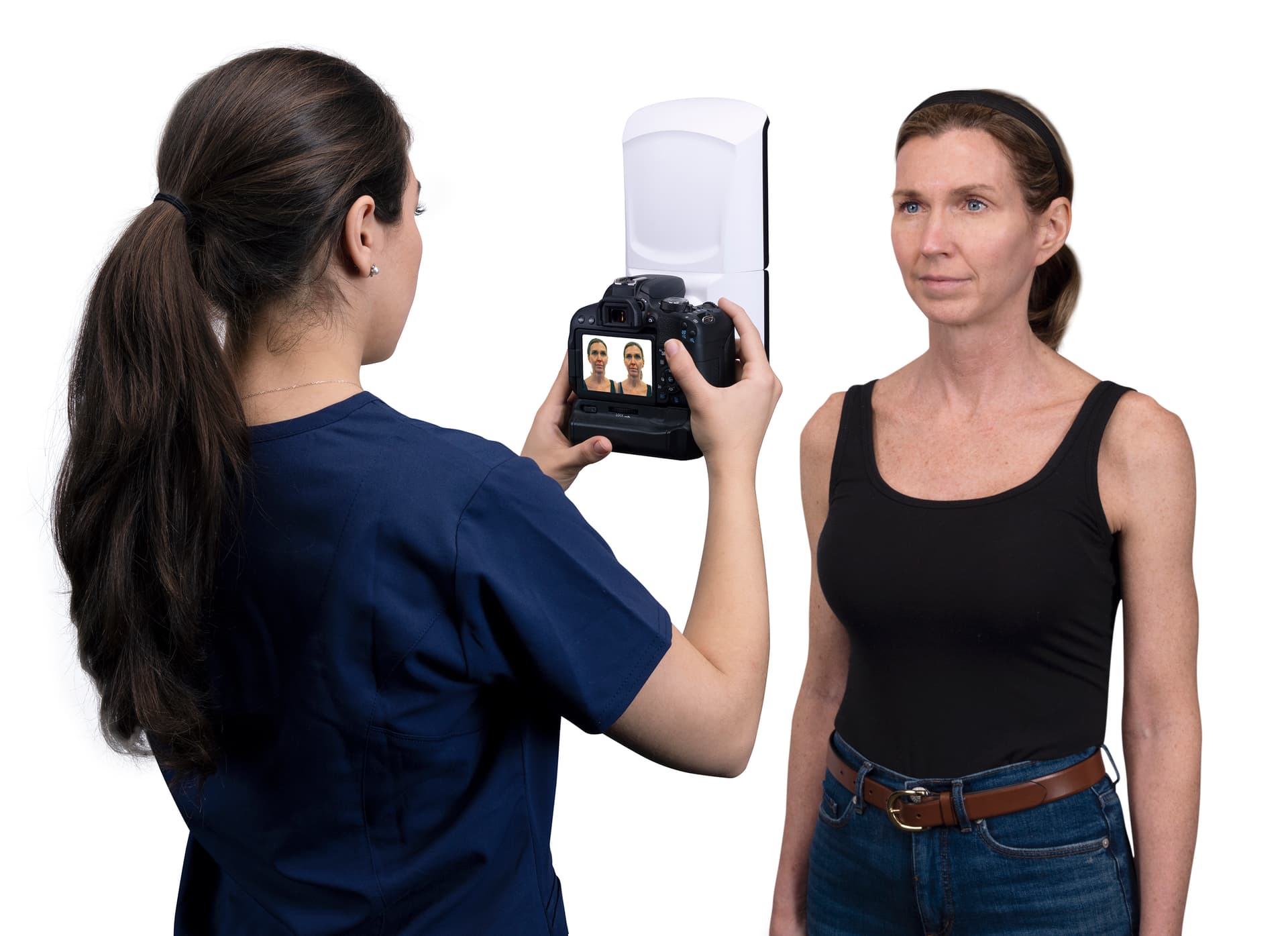
Standardised 3D photography using the Vectra H2 system
A systematic review by Wolfe et al. (2020) found that only 28.6% of published surgical photographs adhered to the ASPS/PSF photography standards — with many studies showing only a single frontal view. Without standardised angles, lighting, and timing, before and after comparisons can be misleading.
All clinical photographs at NOSE London are taken using:
- Standardised medical photography setup with consistent lighting
- Six standard views: frontal, right profile, left profile, right three-quarter, left three-quarter, and base (worm's eye)
- Same camera settings and distance for pre- and post-operative images
- No filters, retouching, or digital manipulation
- Photographs taken at multiple time points: preoperative, 3 months, 6 months, and 12 months
This approach follows the ASPS/PSF guidelines and ensures that every comparison you see in this gallery is fair and reproducible.
What Affects Your Result?
Several factors influence the final outcome:
- Skin thickness — Davis and Hrisomalos (2018) describe how thick skin can obscure skeletal modifications, requiring a graduated treatment strategy and realistic expectations about the degree of visible refinement. Thin skin shows changes quickly but may reveal minor irregularities; thick skin provides better camouflage but takes longer to show the final shape (up to 18–24 months).
- Cartilage strength — weak or thin cartilage may require additional grafting for structural support
- Previous surgery — revision cases have scar tissue that affects healing and may limit what can be achieved. Rasti et al. (2022) used ultrasonography to show that the skin-soft tissue envelope (SSTE) is significantly thicker after revision rhinoplasty compared to primary surgery at all measured timepoints — meaning swelling takes longer to resolve and the final result takes longer to emerge.
- Healing biology — some patients develop more scar tissue than others; this is partly genetic and not fully predictable
- Compliance with aftercare — avoiding trauma, wearing the splint as directed, and attending follow-up appointments all matter
Setting Realistic Expectations
A systematic review by Veale et al. (2016) found that 20.1% of rhinoplasty patients meet diagnostic criteria for body dysmorphic disorder (BDD) — the highest prevalence of any cosmetic surgery setting. BDD is a condition in which a person perceives a defect in their appearance that is not observable or appears slight to others, and it is associated with poor surgical satisfaction regardless of the objective quality of the result.
The AAO-HNS Clinical Practice Guideline (Ishii et al., 2017) recommends that clinicians should ask patients about their motivations for seeking surgery and provide honest feedback on whether their expectations are realistic. Kern and Friedman (2019) further emphasise the importance of routine BDD screening and structured rapport-building during the preoperative interview to identify patients who may not benefit from surgery.
I take this seriously. At consultation, I ask every patient what they want to change, why it matters to them, and what outcome would make them feel the surgery was worthwhile. If I believe the concern is disproportionate to the anatomical finding, or if expectations are not achievable, I will say so — clearly and kindly. This is not a barrier to treatment; it is a commitment to good outcomes.
References
- Ishii LE, Tollefson TT, Basura GJ, et al. Clinical Practice Guideline: Improving Nasal Form and Function after Rhinoplasty. Otolaryngol Head Neck Surg. 2017;156(S2):S1–S30. DOI: 10.1177/0194599816683153
- Citron I, Townley W. Assessing outcomes from rhinoplasty using clinical and patient reported measures (FACE-Q). JPRAS. 2023;84:182–186.
- Veale D, Gledhill LJ, Christodoulou P, Hodsoll J. Body dysmorphic disorder in different settings: A systematic review and estimated weighted prevalence. Body Image. 2016;18:168–186. DOI: 10.1016/j.bodyim.2016.07.003
- Givens VB, Perkins SW. Preoperative Imaging and Online Photo Galleries: The Key to Surgical Commitment. Surg J. 2021;7(4):e322–e326. DOI: 10.1055/s-0041-1739117
- Rasti M, Rasti S, Behshadnia F. Evaluation of SSTE Thickness by Ultrasonography after Primary and Revision Rhinoplasty. Aesthetic Plast Surg. 2022;47(2):738–745. DOI: 10.1007/s00266-022-03053-9
- Davis RE, Hrisomalos EN. Surgical Management of the Thick-Skinned Nose. Facial Plast Surg. 2018;34(1):22–28. DOI: 10.1055/s-0037-1617421
- Wolfe EM, et al. Establishing Photographic Standards for Facial Transplantation: A Systematic Review. Plast Reconstr Surg Glob Open. 2020;8(5):e2834. DOI: 10.1097/GOX.0000000000002834
- Kern E, Friedman O. Avoiding the Unhappy Patient by Building Rapport in the Internet Age. Facial Plast Surg. 2019;35(2):210–213. DOI: 10.1055/s-0039-1683858
- Luong K, Slijper H, Stubenitsky B, et al. Changes in patient-reported satisfaction and quality-of-life 6 months after rhinoplasty. JPRAS. 2024;91:325–334.
- Werathammo M, Seresirikachorn K, Charoenlux P. Unveiling the Impact of Three-Dimensional Technology on Rhinoplasty: A Systematic Review and Meta-analysis. Facial Plast Surg. 2024;41:401–409. — 12 studies, 595 patients. 3D significantly improved surgeon satisfaction (p=0.0002) and precision vs 2D.
- Persing S, Timberlake A, Madari S, Steinbacher D. Three-Dimensional Imaging in Rhinoplasty: A Comparison of the Simulated versus Actual Result. Aesthetic Plast Surg. 2018;42(5):1331–1335. DOI: 10.1007/s00266-018-1151-9— VECTRA system. Blinded panel rated actual result superior to simulation in 77.5% of cases (p<0.001).
- Li W, Liang Y, Sun Y, et al. Application of Three-Dimensional Imaging in Asian Rhinoplasty with Costal Cartilage. Aesthetic Plast Surg. 2021;45(4):1714–1720. DOI: 10.1007/s00266-020-02088-0— RCT (n=44). 3D simulation significantly increased satisfaction with doctor-patient communication.
Before & After FAQ
See What's Possible for Your Nose
Book a consultation to discuss your goals and see cases similar to yours. The £250 fee is credited if you proceed to surgery.